
In the ever-evolving landscape of digital marketing, the humble website has undergone a profound transformation. Once a static digital brochure—a place to simply list services and provide a phone number—it has become a dynamic, interactive hub for customer engagement. Yet, many businesses still operate on an outdated model. They invest heavily in creating beautiful, informative content, publish it, and then wait, hoping visitors will find the exact information they need and take the next step on their own. This passive approach is no longer sufficient in a world where consumers expect instant gratification and personalized experiences.
The modern user journey is not linear. Visitors arrive on your site with diverse needs, varying levels of knowledge, and a limited attention span. While a well-written blog post or a detailed case study is invaluable, it represents only one half of the equation. It provides the „what” but often struggles to deliver the „what now” in a personalized, immediate way. This is where the crucial missing piece comes in: conversation. By integrating intelligent, AI-driven conversations with your rich, foundational content, you can bridge the gap between passive browsing and active engagement, transforming your website from a simple library into a powerful lead generation engine.
Table of Contents:
- The Age of Static Content: Informative but Incomplete
- The Rise of Conversational Marketing: Meeting Users in Real-Time
- The Synergy of Content and Conversation: A Winning Formula
The Age of Static Content: Informative but Incomplete
For decades, the core tenet of digital marketing has been „content is king.” This mantra led to a boom in corporate blogs, resource centers, whitepapers, and eBooks. The strategy was simple and logical: create valuable content that answers your target audience’s questions, optimize it for search engines, and you will attract organic traffic. This approach, centered around Search Engine Optimization (SEO), has been undeniably successful. A website rich with high-quality, relevant content is more likely to rank high on Google, establish authority in its industry, and draw in a steady stream of visitors.
The Role of Traditional SEO and Content Marketing
Traditional content marketing serves as the foundation of a modern digital presence. Think of it as building a comprehensive library about your industry, products, and services. Each article, guide, or case study is a book on a shelf, waiting for the right person to find it. The goal of SEO is to create the best possible card catalog, making it easy for search engines like Google to understand what each piece of content is about and show it to users with relevant queries. This involves meticulous keyword research, on-page optimization, creating high-quality backlinks, and ensuring a technically sound website.
When executed well, this strategy works wonders for visibility. A company selling project management software might write articles on „Tips for Effective Remote Team Collaboration” or „How to Choose the Right PM Tool.” These pieces attract potential customers at various stages of the buying journey, from initial awareness to consideration. The content serves to educate the visitor, build trust, and position the company as an expert. This foundational content is non-negotiable; without it, you have no authority and little to no organic traffic. Your website would be a storefront with no products on the shelves. This is a core part of the services we champion at MarketingV8, building that essential foundation for businesses to thrive online.
The Engagement Gap: Where Static Content Falls Short
However, this library model has a significant flaw: it’s inherently passive. A visitor lands on your blog post, reads it, and then what? They are left to their own devices. They might have a follow-up question that the article didn’t cover. They might be ready to take the next step but find the process of locating the „Contact Us” page or filling out a lengthy form too cumbersome. This friction creates what is known as the „engagement gap.”
The static nature of traditional content leads to several challenges:
- One-Way Communication: A blog post is a monologue. It speaks at the reader, but it cannot listen. There is no opportunity for real-time clarification or a dialogue tailored to the user’s specific context.
- Information Overload: A user might land on a 3,000-word ultimate guide. While comprehensive, they may only need one specific piece of information buried deep within the text. Many will simply leave rather than sift through the entire document.
- Delayed Gratification: If a visitor has a pressing question or wants a quote, they are forced to fill out a form and wait—hours, or even days—for a response. In today’s fast-paced digital world, that delay is often enough for a potential lead to go to a competitor who can provide an instant answer.
- Generic Experience: Every visitor reads the same text, regardless of their industry, company size, or specific pain point. There is no personalization, which means the message may not resonate as strongly as it could.
This engagement gap results in lost opportunities. You have successfully done the hard work of attracting a visitor to your site, only to let them slip away because you couldn’t engage them in a meaningful, timely conversation. Your library is full of valuable books, but there is no librarian to help people find exactly what they need.

The Rise of Conversational Marketing: Meeting Users in Real-Time
The solution to the engagement gap lies in shifting from a monologue to a dialogue. This is the essence of conversational marketing. Instead of making users work to find information, you bring the information to them through real-time, one-on-one conversations. This approach is powered by advancements in Artificial Intelligence, particularly Natural Language Processing (NLP), which allows software to understand and respond to human language in a surprisingly nuanced and helpful way.
What is Conversational AI and How Does it Work?
When we talk about conversational AI on a website, we are typically referring to intelligent chatbots or virtual assistants. These are not the clunky, rule-based bots of the past that could only respond to a limited set of pre-programmed commands. Modern conversational AI is far more sophisticated. It leverages machine learning to understand the intent behind a user’s query, even if it’s phrased in an unusual way or contains typos. It can access a vast knowledge base—your entire website’s content—to pull out relevant answers instantly.
Here’s how it works in practice: An AI assistant can be trained on all your blog posts, product pages, and FAQs. When a user asks, „How does your pricing work for teams over 50?”, the AI doesn’t just point them to the pricing page. It can extract the specific information and present it directly in the chat window. It can then ask a follow-up question, like, „Are you interested in our Enterprise plan, which includes dedicated support?” This simple interaction is far more effective than leaving the user to navigate the site on their own. The goal is to create a seamless, helpful, and interactive user experience, a principle central to modern digital strategies explored by leading marketing firms.
The Psychology of Immediacy: Why Users Prefer Conversation
The success of conversational marketing is rooted in fundamental human psychology. We live in an on-demand world, conditioned by services like Amazon Prime, Netflix, and Uber. We expect answers and solutions instantly. This expectation has carried over to how we interact with businesses. A study by HubSpot found that 82% of consumers rate an „immediate” response as important or very important when they have a marketing or sales question.
The modern customer is impatient. They value their time immensely and will gravitate towards the path of least resistance. If you can provide an answer in five seconds through a chat, while your competitor requires filling out a form with a 24-hour response time, you have already won a significant advantage.
Conversation feels natural. It’s how humans have exchanged information for millennia. A well-designed conversational AI mimics this familiar interaction pattern, making the user feel heard and understood. It breaks down the impersonal barrier of a corporate website and creates a more personal, one-on-one connection. This immediacy and personalization build trust and confidence, encouraging the user to move forward in the buyer’s journey. By engaging users the moment their interest is piqued, you capture their attention when it is at its highest, dramatically increasing the likelihood of conversion.
The Synergy of Content and Conversation: A Winning Formula
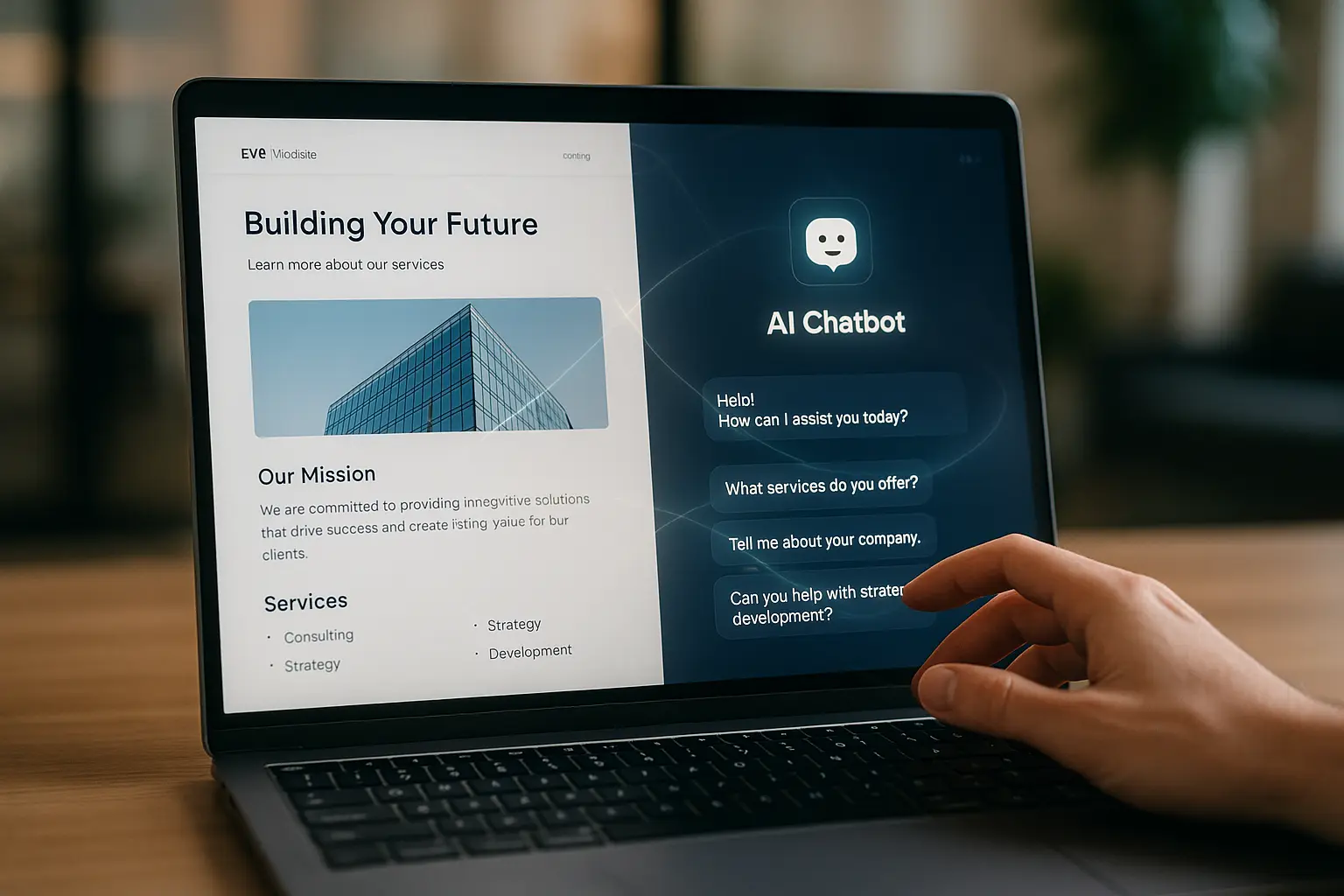
The key takeaway is not that conversation replaces content. Rather, they are two sides of the same coin, working in perfect synergy to create a superior user experience that drives results. Your content attracts and educates, while conversation engages and converts. Together, they form a powerful engine for lead generation and customer acquisition. Think of your content as the fuel and the conversational AI as the high-performance engine that uses that fuel to propel your business forward.
How AI Conversations Enhance Your Existing Content
Integrating a conversational AI layer onto your website doesn’t require you to abandon your content strategy; it supercharges it. Here are several ways conversation amplifies the value of your content:
- Content Discovery and Navigation: Instead of relying on a search bar or complex navigation menus, a user can simply ask the AI assistant, „I’m looking for a case study in the healthcare industry.” The AI can instantly retrieve and link to the most relevant content, providing a frictionless discovery experience.
- On-Demand Summaries: For a visitor who is short on time, the AI can provide a concise summary of a long article or whitepaper. It can pull out the key bullet points or answer a specific question based on the document, delivering value without requiring a full read-through.
- Answering Follow-Up Questions: No article can cover every possible question. When a reader has a query that goes beyond the text, the AI is there to answer it instantly. This prevents the user from leaving your site to search for the answer elsewhere.
- Lead Qualification in Context: The AI can be programmed to ask qualifying questions based on the content the user is viewing. If they are on a product features page, the AI can ask, „What is your primary use case?” or „How many users are on your team?” This gathers valuable lead data while the prospect’s intent is high. This approach to dynamic engagement is a cornerstone of the solutions provided by MarketingV8.
This powerful combination ensures that the investment you make in creating high-quality content yields a much higher return. Every piece of content becomes an interactive entry point for a meaningful conversation.
From Passive Readers to Active Leads: The Conversion Journey
Let’s map out the modern customer journey that this integrated approach enables. It begins with content but culminates in conversation.
Step 1: Attraction (Content): A potential customer has a problem. They go to Google and search for a solution. Thanks to your excellent SEO and content strategy, your blog post, „The Top 5 Challenges of Hybrid Work and How to Solve Them,” appears at the top of the results. The user clicks and lands on your website.
Step 2: Education (Content): The user reads your article. It’s well-researched, insightful, and directly addresses their pain points. You have successfully established authority and built a foundational level of trust. They are now aware of your brand and see you as a credible source of information.
Step 3: Engagement (Conversation): As they finish reading, a non-intrusive AI assistant pops up with a contextual message: „Found this article helpful? I can answer any other questions you have about managing a hybrid team or show you how our platform specifically addresses these challenges.”
Step 4: Qualification & Conversion (Conversation): The user decides to engage. They ask a specific question about an integration. The AI answers it instantly. Seeing that the user is a good fit, the AI then offers the next logical step: „Would you be interested in a quick 15-minute demo to see it in action? I can book a time on our calendar right now.” The user agrees, selects a time slot directly within the chat widget, and a meeting is booked. This whole process takes less than two minutes. The journey from anonymous visitor to qualified, sales-ready lead is seamless. Harnessing these technologies is what separates market leaders from the rest, a philosophy we live by at our agency.
This dynamic interplay between static information and real-time interaction is the future of digital marketing. It respects the user’s time, provides immediate value, and efficiently guides them down the conversion path. It transforms your website from a passive resource into an active, 24/7 sales and support representative. As you refine your digital presence, always ask how you can combine great information with instant interaction. The businesses that master this synergy will be the ones that win the attention and loyalty of the modern consumer.
Are you ready to transform your website from a static brochure into a lead-generation powerhouse? To explore how the power of content and conversation can drive your business forward, we invite you to get in touch. Let’s discuss a strategy that fits your unique goals. You can learn more about our comprehensive digital marketing solutions at MarketingV8.
To start your own transformation, contact us today.
Dodaj komentarz