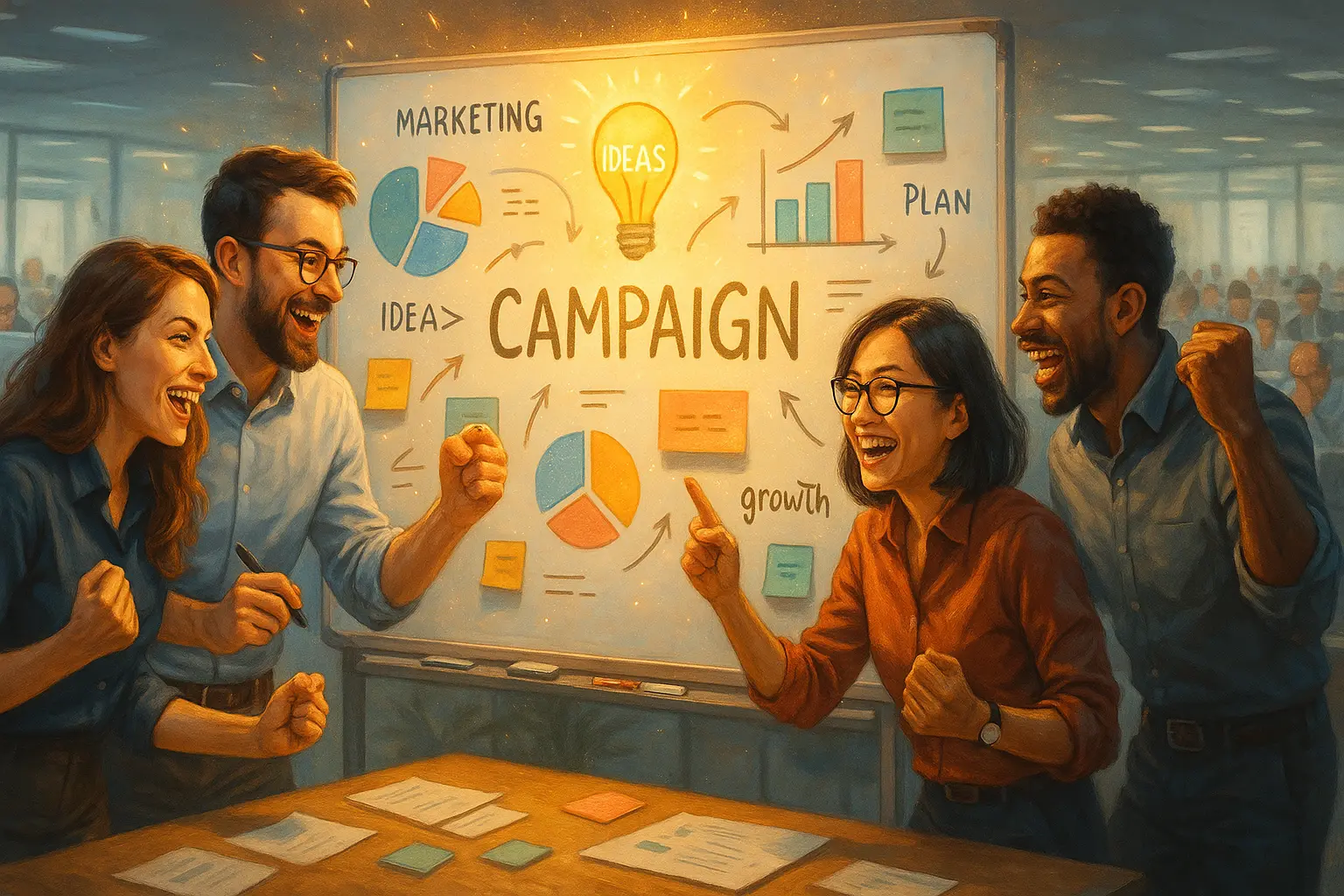
In the vast and competitive landscape of modern business, the marketing department often feels like an arena where size dictates the winner. Large corporations with sprawling marketing departments, nine-figure budgets, and armies of specialists seem to hold an insurmountable advantage. They can launch multi-channel campaigns, produce a torrent of content, and dominate advertising spaces, leaving smaller teams feeling like they’ve brought a slingshot to a cannon fight. This narrative, however, is rapidly changing. A powerful new force is leveling the playing field, acting as the great equalizer for ambitious, lean, and agile teams: Artificial Intelligence. AI-supported systems are no longer the exclusive domain of tech giants. They are accessible, affordable, and transformative tools that allow small teams to punch far above their weight, enabling them to publish more consistently, respond faster, and manage complex marketing tasks without needing to expand their headcount.
This isn’t a story about replacing human ingenuity with algorithms. Instead, it’s about augmenting it. It’s about empowering a small group of passionate marketers with the capabilities of a department many times its size. By automating the repetitive, analyzing the complex, and personalizing at scale, AI frees up small teams to focus on what they do best: understanding their customers, crafting compelling stories, and building genuine relationships. This article will explore the practical strategies and AI-powered systems that small teams can leverage to not just compete with larger marketing departments, but to outmaneuver them with speed, precision, and efficiency.
Table of Contents:
- The Modern Marketing Battlefield: A Game of Resources
- Unleashing the Power of AI: Your Small Team’s Secret Weapon
- Building an AI-Powered Marketing Flywheel
The Modern Marketing Battlefield: A Game of Resources
For decades, the fundamental equation of marketing seemed simple: more resources equaled more impact. A bigger budget meant more ad placements, more sophisticated tools, and the ability to hire top-tier talent. A larger team meant specialized roles—an SEO guru, a content creator, a social media manager, a data analyst, an email marketing expert—each diving deep into their respective domains. This specialization allowed large departments to execute complex, multi-faceted strategies with a level of depth and breadth that small teams could only dream of.
The Resource Gap: Why Size Traditionally Mattered
The challenges for a small marketing team, often consisting of just a few individuals or even a single person, are immense. Team members are forced to be generalists, wearing multiple hats and juggling a dozen different responsibilities. One morning they might be writing a blog post, by the afternoon they are designing social media graphics, and in the evening they are analyzing campaign data. This constant context-switching is not only exhausting but also prevents them from achieving deep expertise in any single area. The pressure to be present and active across all channels—from SEO and content marketing to social media and paid advertising—is relentless.
This resource disparity manifests in several critical areas. First, content velocity. Larger teams can maintain a rigorous publishing schedule, churning out blog posts, videos, and social media updates daily. This consistency is crucial for building an audience and ranking in search engines. A small team struggles to keep pace, often leading to sporadic posting and a loss of momentum. Second, data analysis. Big companies have data scientists and expensive business intelligence tools to sift through mountains of data, uncovering subtle trends and consumer insights. Small teams, lacking these resources, often have to rely on basic analytics and gut feelings. Finally, there’s the challenge of personalization. Delivering a tailored experience to thousands of customers requires sophisticated segmentation and automation, a task that is manually impossible for a small crew.
The Shift: How Technology is Leveling the Playing Field
The paradigm is shifting. The raw power of a large team is being challenged by the strategic efficiency of a smaller, tech-enabled one. The proliferation of Software-as-a-Service (SaaS) platforms and, more importantly, the integration of artificial intelligence into these tools, has democratized access to powerful marketing capabilities. What once required a dedicated analyst can now be achieved with an AI-powered dashboard. What once required a team of writers can now be supplemented by an AI content assistant. This technological evolution means that success is no longer solely dependent on the number of employees, but on the intelligence of the systems they employ. Forward-thinking companies are discovering that a small, agile team equipped with the right AI tools can be more effective than a larger, more bureaucratic department. This is the new frontier where strategy, creativity, and technological prowess combine to create a formidable competitive edge. At MarketingV8, we focus on harnessing this technological shift to empower businesses of all sizes.

Unleashing the Power of AI: Your Small Team’s Secret Weapon
The term „Artificial Intelligence” can conjure images of complex, futuristic technology, but in the context of modern marketing, it’s far more practical and accessible. Think of AI not as a replacement for human marketers, but as the ultimate force multiplier—a tireless, data-driven assistant that handles the mundane, repetitive, and time-consuming tasks, thereby freeing up human talent for high-level strategy, creative thinking, and customer connection. For a small team, this is not just a convenience; it’s a revolutionary change in workflow and capability. By strategically implementing AI, a team of three can achieve the output and sophistication of a team of thirty.
AI for Consistent Content Creation
Content is the fuel of modern marketing, but maintaining a consistent and high-quality output is one of the biggest hurdles for small teams. This is where AI makes an immediate and profound impact. AI-powered content tools can assist at every stage of the creation process, dramatically reducing the time and effort required to publish.
It starts with ideation. Instead of spending hours brainstorming, AI tools can analyze search trends, competitor content, and audience questions to generate a list of relevant, high-potential topics in minutes. Once a topic is chosen, AI can help create a detailed outline, ensuring the content is well-structured and covers all necessary points. For the writing process itself, AI acts as a powerful collaborator. It can generate first drafts to overcome the dreaded „blank page” syndrome, suggest better phrasing, check for grammatical errors, and even ensure the tone of voice is consistent with the brand. Beyond writing, AI helps with optimization. It can analyze a draft and suggest SEO improvements, such as target keywords, internal linking opportunities, and meta descriptions, increasing the content’s visibility without requiring deep SEO expertise. This comprehensive support system transforms content creation from a daunting task into a streamlined, manageable process. We believe in integrating these tools to create powerful content engines for our clients at MarketingV8.
AI for Hyper-Personalization at Scale
Today’s consumers don’t just appreciate personalization; they expect it. They want brands to understand their needs, remember their preferences, and communicate with them in a relevant way. Large companies achieve this with massive CRM systems and data analysis teams. AI now brings this power to everyone.
The modern customer doesn’t just appreciate personalization; they expect it. AI allows a team of two to deliver the kind of tailored experience that once required a team of twenty.
AI algorithms can analyze customer data—purchase history, website behavior, email engagement—to build detailed profiles and automatically segment audiences into micro-groups. An e-commerce store, for instance, can use AI to identify customers who frequently buy a certain category of product and automatically send them targeted promotions for new arrivals in that category. AI-powered email marketing platforms can go even further, personalizing the content of each email based on individual user behavior. This could mean showing different product recommendations, using different subject lines, or even sending the email at the optimal time for each recipient. This level of personalization, executed automatically, leads to significantly higher engagement, conversion rates, and customer loyalty—all without adding to the small team’s workload.
AI for Rapid Response and Customer Engagement
In a 24/7 digital world, speed matters. A quick response to a customer query can be the difference between a sale and a lost opportunity. Large departments have customer service teams or social media managers working around the clock. A small team can’t possibly be available at all times, but an AI can. AI-powered chatbots on a website are a prime example. They can instantly answer frequently asked questions, help users navigate the site, qualify leads by asking preliminary questions, and even schedule appointments. This provides immediate value to the visitor and ensures that no potential customer is left waiting. For more complex issues, the chatbot can seamlessly hand the conversation over to a human team member during business hours, providing them with the full transcript of the interaction.
This extends to social media as well. AI-powered social listening tools can monitor conversations across various platforms, flagging brand mentions, relevant keywords, and customer complaints. This allows a small team to engage in the most important conversations without having to manually sift through endless feeds. It’s about working smarter, not harder, and focusing human interaction where it will have the greatest impact. Implementing such smart systems is a core part of the strategy at MarketingV8.

Building an AI-Powered Marketing Flywheel
The true power of leveraging AI as a small team isn’t just about using individual tools in isolation. It’s about creating an integrated, self-reinforcing system—a marketing flywheel—where each component powered by AI feeds and accelerates the others. The flywheel concept, which focuses on attracting, engaging, and delighting customers, becomes exponentially more powerful when AI is used to reduce friction and add force at every stage. This holistic approach transforms marketing from a series of disjointed campaigns into a cohesive, automated engine for growth.
Integrating the Right Tools without Breaking the Bank
One of the biggest misconceptions about AI is that it is prohibitively expensive and complex. While enterprise-level solutions can be costly, the market is now filled with accessible and affordable AI-powered tools designed specifically for small and medium-sized businesses. Many of the platforms you may already be using—like your email marketing provider, your social media scheduler, or your CRM—are increasingly embedding powerful AI features into their core offerings at little to no extra cost.
When building your AI-powered tech stack, it’s crucial to be strategic. Here are a few key considerations:
- Start with Your Biggest Pain Point: Don’t try to adopt every AI tool at once. Identify the single biggest bottleneck in your marketing workflow. Is it content creation? Lead qualification? Data analysis? Find a tool that solves that specific problem first.
- Prioritize Integration: The goal is to build a connected system. Look for tools that integrate seamlessly with each other. For example, your AI chatbot should be able to pass lead information directly into your CRM, which in turn should trigger a personalized email sequence from your marketing automation platform.
- Look for Multi-Function Platforms: To avoid „tool overload” and keep costs down, prioritize platforms that offer multiple AI-driven functions. A single platform that offers AI-assisted content creation, SEO analysis, and social media scheduling can be more valuable than three separate tools.
- Measure the ROI: The purpose of these tools is to save time and drive results. Track how much time your team is saving on specific tasks and whether the AI-powered initiatives are leading to tangible outcomes like increased website traffic, higher conversion rates, or more qualified leads. This will justify the investment and guide future decisions. Navigating this landscape can be challenging, which is why partnering with an expert like MarketingV8 can provide a clear roadmap.
The Human Element: Strategy and Creativity Reign Supreme
As we embrace this technological revolution, it is essential to remember that AI is a tool, not a replacement for human intellect and creativity. Its purpose is to handle the execution, not the vision. The small team’s ultimate competitive advantage lies not in its ability to operate software, but in its agility, its deep-seated understanding of its niche, and its capacity for genuine human connection. AI can analyze data, but it can’t create a brand’s soul. It can generate text, but it can’t craft a truly resonant story that captures the hearts and minds of an audience.
AI can write a social media post, but it can’t build a community. It can analyze data, but it can’t have a groundbreaking strategic insight over a cup of coffee. Your team’s creativity is your ultimate competitive advantage. Use AI to free your team from the drudgery of repetitive tasks so they can spend more time talking to customers, brainstorming innovative campaigns, and building strategic partnerships. The winning formula is the combination of human-led strategy and AI-powered execution. It is this synergy that allows a small team to be not just efficient, but also brilliant. This philosophy of combining the best of technology with human expertise is at the core of our mission at MarketingV8.
In conclusion, the battle between small and large marketing departments is no longer defined by the size of the team or the budget. It is defined by the ability to adapt and leverage technology intelligently. AI has democratized marketing, providing small teams with the tools to automate processes, glean powerful insights from data, and deliver deeply personalized experiences at scale. By embracing these systems, small teams can not only compete but thrive, turning their size into an advantage of speed and agility. The future of marketing belongs not to the biggest, but to the smartest and most adaptable.
Ready to empower your small team and compete with the giants? Contact us today to learn how we can build your AI-powered marketing engine.
Dodaj komentarz