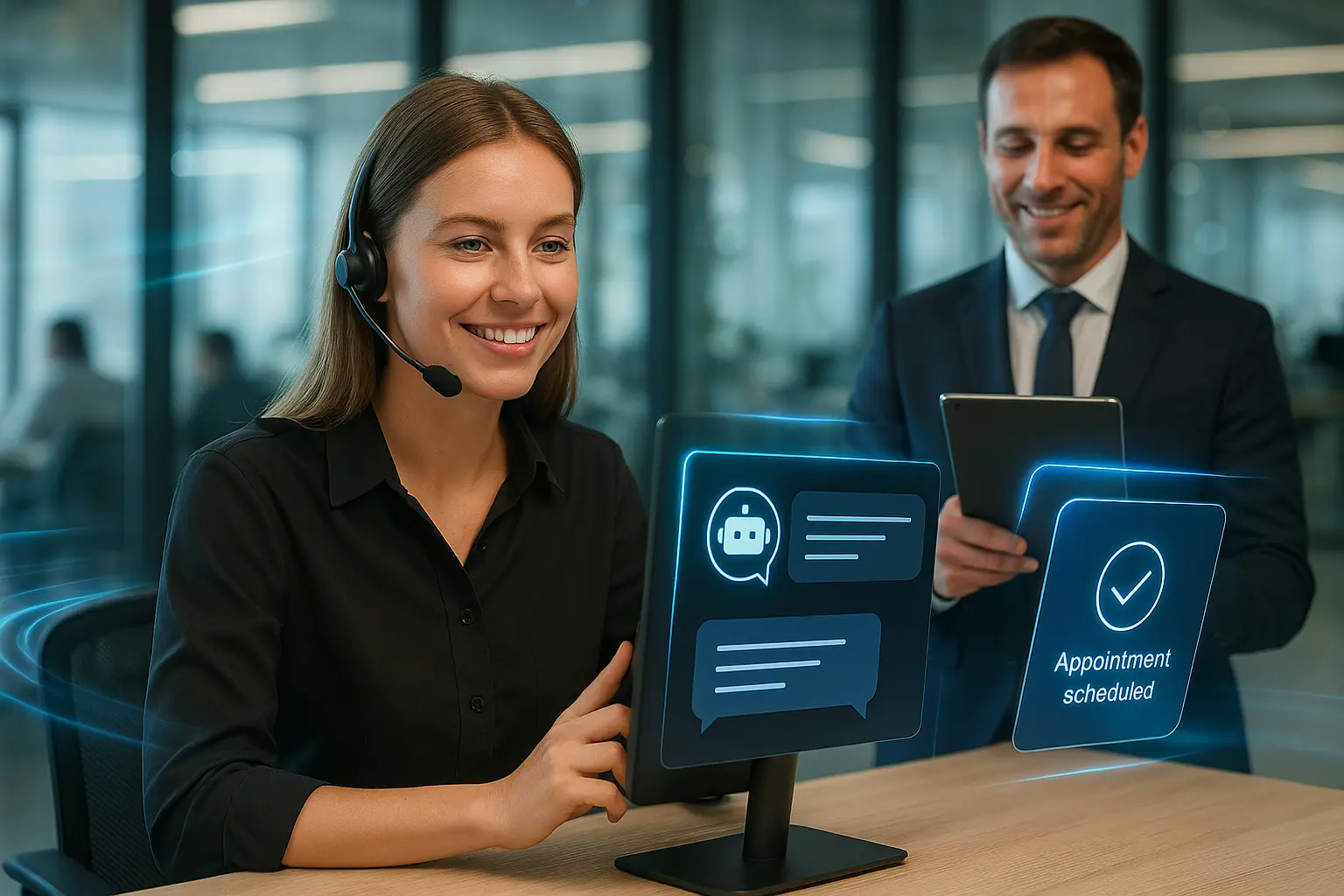
In today’s fast-paced digital marketplace, the speed and efficiency of your customer interactions can be the deciding factor between securing a new client and losing them to a competitor. The process of booking appointments or scheduling product demos, once a tedious back-and-forth of emails and phone calls, has been completely transformed. The catalyst for this revolution is conversational Artificial Intelligence. AI-powered chatbots are no longer simple, pre-programmed responders; they are sophisticated digital assistants capable of managing complex scheduling tasks with remarkable precision and personalization. By automating the initial stages of engagement, businesses can ensure that no lead is left waiting and that every potential customer receives immediate, relevant attention. This guide delves into how AI chatbots support and streamline appointment booking and demo requests, turning website visitors into qualified, scheduled leads around the clock. An intelligent solution like the MarketingV8 Chatbot360 can become the most efficient member of your sales development team, working tirelessly to fill your calendar with valuable conversations.
Table of Contents:
- The Challenge of Modern Scheduling: Why Manual Methods Fall Short
- How AI Chatbots Redefine the Booking Experience
- The Technical Magic Behind Automated Scheduling
The Challenge of Modern Scheduling: Why Manual Methods Fall Short
Before we can fully appreciate the impact of AI on scheduling, it’s essential to understand the inherent flaws of traditional methods. For decades, the process of setting up a meeting, a sales demo, or a consultation has been a significant source of friction for both businesses and their potential clients. This friction not only slows down the sales cycle but also creates a poor initial impression, potentially deterring high-value prospects before a conversation even begins. The manual approach, while seemingly straightforward, is riddled with inefficiencies that simply do not scale in a global, always-on economy.
The Frustration of the Waiting Game
Consider the typical journey of a website visitor interested in a product demo. They navigate to your „Request a Demo” page and fill out a form. What happens next is a critical, yet often delayed, step. The lead’s information lands in an email inbox or a CRM queue, where it waits for a sales representative to see it. This could take hours, or even a full day if the request comes in after business hours or during a busy period. During this waiting period, the prospect’s initial enthusiasm wanes. They may continue their research and engage with a competitor who offers a more immediate response.
The subsequent back-and-forth communication to find a mutually available time slot further extends this delay. The „phone tag” or „email ping-pong” of suggesting times, checking calendars, and accounting for different time zones is inefficient and frustrating for everyone involved. Each additional email is another potential point of failure where the prospect can lose interest or disengage. This delay is more than just an inconvenience; it represents a tangible risk of losing business. In a world of instant gratification, making a potential customer wait is a critical strategic error.
Human Error and Operational Inefficiency
Manual scheduling is also highly susceptible to human error. A sales representative might accidentally double-book a time slot, misread a time zone, or forget to send a meeting confirmation and link. These small mistakes can lead to rescheduled appointments, wasted time for both parties, and a perception of unprofessionalism. The administrative overhead required to manage calendars, send reminders, and follow up on requests consumes valuable time that sales and support teams could be spending on higher-value activities like preparing for demos, nurturing relationships, and closing deals.
Furthermore, without an automated system, there’s often a lack of standardization in how information is collected. One representative might ask for company size and budget, while another might forget. This inconsistency leads to incomplete lead profiles in the CRM, making it difficult for the team to properly prepare for the scheduled conversation. The entire process becomes a bottleneck, limiting the number of qualified demos a team can handle and ultimately capping growth potential.

How AI Chatbots Redefine the Booking Experience
AI chatbots directly address the friction and inefficiency of manual scheduling by creating an automated, interactive, and instantaneous experience. They act as a digital concierge on your website, available 24/7 to engage visitors the moment their interest is piqued. This immediate engagement is a game-changer, transforming a passive contact form into a dynamic conversation that guides the user smoothly from initial query to a confirmed appointment on the calendar.
Answering Pre-Booking Questions Instantly
Often, a visitor isn’t immediately ready to book a demo. They have questions first. „Does your product integrate with Salesforce?” „What are your pricing tiers?” „Is this solution suitable for a small business?” In a traditional model, these questions would be sent via a contact form, leading to the same delays discussed earlier. An AI chatbot, however, can provide instant answers. Trained on your company’s knowledge base, product documentation, and FAQs, the chatbot can address these preliminary queries in real-time.
This capability serves two crucial functions. First, it provides immediate value to the visitor, helping them make an informed decision and building trust in your brand. Second, it naturally warms up the lead. By resolving their initial concerns, the chatbot smoothly transitions the conversation towards the next logical step: booking a more in-depth discussion. For example, after answering a question about integrations, the chatbot can proactively say, „I see you’re interested in our Salesforce integration. Would you like to schedule a 15-minute demo with one of our specialists to see exactly how it works?” This conversational flow is far more effective than a static form. A powerful tool like an AI chatbot acts as a front-line expert, ensuring no question goes unanswered and no opportunity is missed, regardless of the time of day.
Intelligent Lead Qualification in Real-Time
Not all website visitors are created equal. Some are ready-to-buy decision-makers, while others are students doing research or competitors checking out your offerings. A key role of a sales development team is to qualify leads to ensure that sales representatives spend their time on the most promising opportunities. An AI chatbot can automate this entire process within a single conversation.
By asking a series of targeted questions, the chatbot can qualify interest, budget, authority, need, and timeline (BANT) or any other custom criteria you define. This isn’t a clunky form; it’s a natural dialogue.
The chatbot can ask questions like:
- „To help me connect you with the right person, could you tell me the size of your team?”
- „What is the primary challenge you’re hoping to solve with our solution?”
- „Are you the primary decision-maker for this type of software purchase?”
Based on the user’s responses, the chatbot can instantly determine if the lead meets the criteria for a high-priority demo. If they do, the bot can immediately present the sales team’s calendar. If they don’t, it can offer alternative resources, such as a whitepaper, a recorded webinar, or routing them to a nurturing email sequence. This real-time filtering ensures that your sales team’s calendar is filled exclusively with well-qualified, high-intent prospects, dramatically increasing sales efficiency. This automated lead qualification, a core feature of systems like the Chatbot360, is essential for scaling a sales organization.
Suggesting the Right Service or Specialist
For businesses with multiple products, services, or specialized teams, routing inquiries to the correct department is a common challenge. A generic „contact us” form often creates an extra step for an internal administrator who has to manually forward the request. An AI chatbot eliminates this inefficiency by intelligently routing the user during the conversation.
For example, if a user expresses interest in „enterprise-level security features,” the chatbot can recognize this and offer to schedule a demo specifically with a security specialist or an enterprise account executive. If a user’s company size is identified as being under 10 employees, the chatbot can present the calendar of a representative who specializes in small businesses. This intelligent routing ensures that the prospect is connected with the person best equipped to address their specific needs from the very first interaction. This not only improves the customer experience but also optimizes internal resources, leading to more productive and relevant sales conversations.

The Technical Magic Behind Automated Scheduling
The seamless user experience provided by an AI chatbot is powered by sophisticated technology working in the background. The real power of these tools lies in their ability to integrate deeply with the existing business software that teams rely on every day. This integration creates a cohesive ecosystem where data flows automatically from the initial chatbot conversation to the sales representative’s calendar and the company’s central customer database, eliminating manual data entry and ensuring everyone has the most up-to-date information.
Seamless Calendar and CRM Integration
The cornerstone of automated scheduling is direct integration with calendar applications like Google Calendar, Outlook Calendar, and scheduling platforms like Calendly. Through secure API connections, the chatbot can access the real-time availability of sales representatives or entire teams. When a qualified lead requests a meeting, the chatbot presents only the time slots that are actually free, preventing any risk of double-booking.
Once the user selects a time, the chatbot automatically creates the event on the representative’s calendar, complete with all necessary details: the prospect’s name, company, email, and even notes from the chatbot conversation. It also sends a confirmation email and a calendar invite to the prospect, often including a video conferencing link. But the integration doesn’t stop there. Crucially, the chatbot also pushes this data to your Customer Relationship Management (CRM) system, such as Salesforce, HubSpot, or Zoho. It can create a new lead or contact record, or update an existing one, and log the scheduled demo as an activity. This ensures a complete, unified view of the customer journey from the very first touchpoint. This level of automation, found in advanced solutions like the Chatbot360 from MarketingV8, is what separates a basic chatbot from a true sales and marketing automation powerhouse.
Gathering Essential Details Effortlessly
An AI chatbot excels at collecting information in a way that feels natural and non-intrusive. Instead of presenting a user with a long form with ten required fields, the chatbot can ask for information one piece at a time within the flow of a conversation. This conversational data collection has a much higher completion rate than traditional forms.
The bot can start with a simple „What’s your name?” and later ask for a „work email to send the meeting invitation to.” It can ask about company name, role, and key challenges as part of the qualification process. This information is not just used for scheduling; it provides invaluable context for the sales representative preparing for the call. They can walk into the meeting already understanding the prospect’s pain points, company size, and primary interests, allowing for a much more tailored and effective conversation. The chatbot can even be programmed to send automated reminders to the prospect before the meeting, reducing the rate of no-shows and ensuring the scheduled appointment turns into a productive conversation.
In conclusion, AI chatbots are an indispensable tool for any modern business looking to optimize its appointment and demo scheduling process. They eliminate friction, provide immediate engagement, and automate the tedious administrative tasks of qualifying and routing leads. By leveraging a sophisticated AI chatbot, you can ensure a flawless customer experience from the first click, fill your sales pipeline with highly qualified meetings, and empower your team to focus on what they do best: building relationships and closing deals. The future of scheduling is conversational, automated, and available 24/7.
Ready to see how an AI chatbot can transform your scheduling and lead generation? Contact us today to learn more.
Dodaj komentarz