
In today’s fast-paced digital landscape, chatbots have evolved from simple novelties to essential tools for customer engagement, lead generation, and support. Businesses are increasingly relying on these AI-powered assistants to provide instant responses, guide users through their websites, and ultimately drive conversions. However, simply deploying a chatbot is not enough. To truly unlock its potential, you must continuously monitor, analyze, and optimize its performance. This process, known as Chatbot Conversion Rate Optimization (CRO), is critical for maximizing your return on investment. But where do you begin? The answer lies in tracking the right metrics.
Understanding what to measure is the foundation of any successful optimization strategy. Without concrete data, your efforts are merely guesswork. You need to move beyond vanity metrics and focus on key performance indicators (KPIs) that directly reflect the chatbot’s impact on your business goals. These metrics provide insights into user behavior, pinpoint areas of friction in conversation flows, and reveal opportunities for improvement. By tracking the right data points, you can transform your chatbot from a passive Q&A tool into a proactive conversion machine. This guide will delve into the essential metrics you need to measure for effective chatbot conversion rate optimization, covering everything from initial user engagement to the final impact on your sales pipeline.
Table of Contents:
- Understanding Foundational Engagement Metrics
- Measuring Lead Generation and Qualification Success
- Analyzing Performance, Efficiency, and Business Impact
Understanding Foundational Engagement Metrics
Before a chatbot can generate a lead or close a sale, it must first successfully engage the user. Engagement metrics are the bedrock of chatbot analytics, telling you whether your bot is even getting the chance to perform its intended function. Low engagement can indicate problems with the chatbot’s visibility, its opening message, or its perceived value to the visitor. If users are not interacting with your bot, none of the other metrics matter. Therefore, understanding and optimizing these initial interactions is the first and most critical step in chatbot CRO. These KPIs help you diagnose the health of your bot’s „first impression” and its ability to hold a user’s attention long enough to provide value.
Engagement Rate: The First Handshake
The Engagement Rate is arguably the most fundamental chatbot metric. It measures the percentage of website visitors who interact with your chatbot. A low engagement rate is a major red flag, suggesting that your chatbot is not effectively capturing user attention. The calculation is straightforward: (Number of Users Who Interacted with the Chatbot / Total Number of Website Visitors) x 100.
Several factors can influence this rate. The chatbot’s design and placement on the page are crucial. Is it easily visible but not intrusive? Does its color scheme align with your brand while still standing out? The proactive opening message is another critical element. A generic „How can I help you?” is far less effective than a context-aware message tailored to the specific page the user is on. For example, on a pricing page, the chatbot could proactively ask, „Have questions about our plans? I can help you find the perfect fit.”
To improve your engagement rate, consider A/B testing different welcome messages, chatbot avatars, and calls-to-action. Analyze which pages have the highest and lowest engagement to understand the user context better. Perhaps the bot is more useful on complex product pages than on your blog. Tools like the Chatbot360 platform provide detailed analytics that allow you to dissect engagement by page, user segment, and time of day, giving you the actionable insights needed to optimize this initial touchpoint.
Conversation Completion Rate: Seeing It Through
Once a user starts a conversation, the next goal is to see it through to a logical conclusion. The Conversation Completion Rate measures the percentage of initiated conversations that reach a defined endpoint, whether that’s answering a question, collecting a lead’s information, or booking a demo. A high drop-off rate mid-conversation indicates a problem. Users might be getting frustrated, confused, or bored.
The formula is: (Number of Completed Conversations / Number of Started Conversations) x 100. To accurately measure this, you must first define what „completed” means for different conversational flows. For a lead generation bot, completion is the successful submission of contact details. For a support bot, it might be when the user confirms their issue has been resolved.
Common reasons for low completion rates include poorly designed conversation flows, unnatural language, an inability to understand user intent, or excessively long interactions. Analyze your conversation logs to identify the exact points where users are abandoning the chat. Are they getting stuck in a loop? Are they typing „talk to a human” repeatedly? These are clear signs of friction. Streamline your chatbot’s scripts, provide clear options and buttons to guide the user, and ensure your Natural Language Processing (NLP) is robust enough to handle common variations of user queries. A well-designed conversation feels less like an interrogation and more like a helpful dialogue, which is key to keeping users engaged until the end.
Measuring Lead Generation and Qualification Success
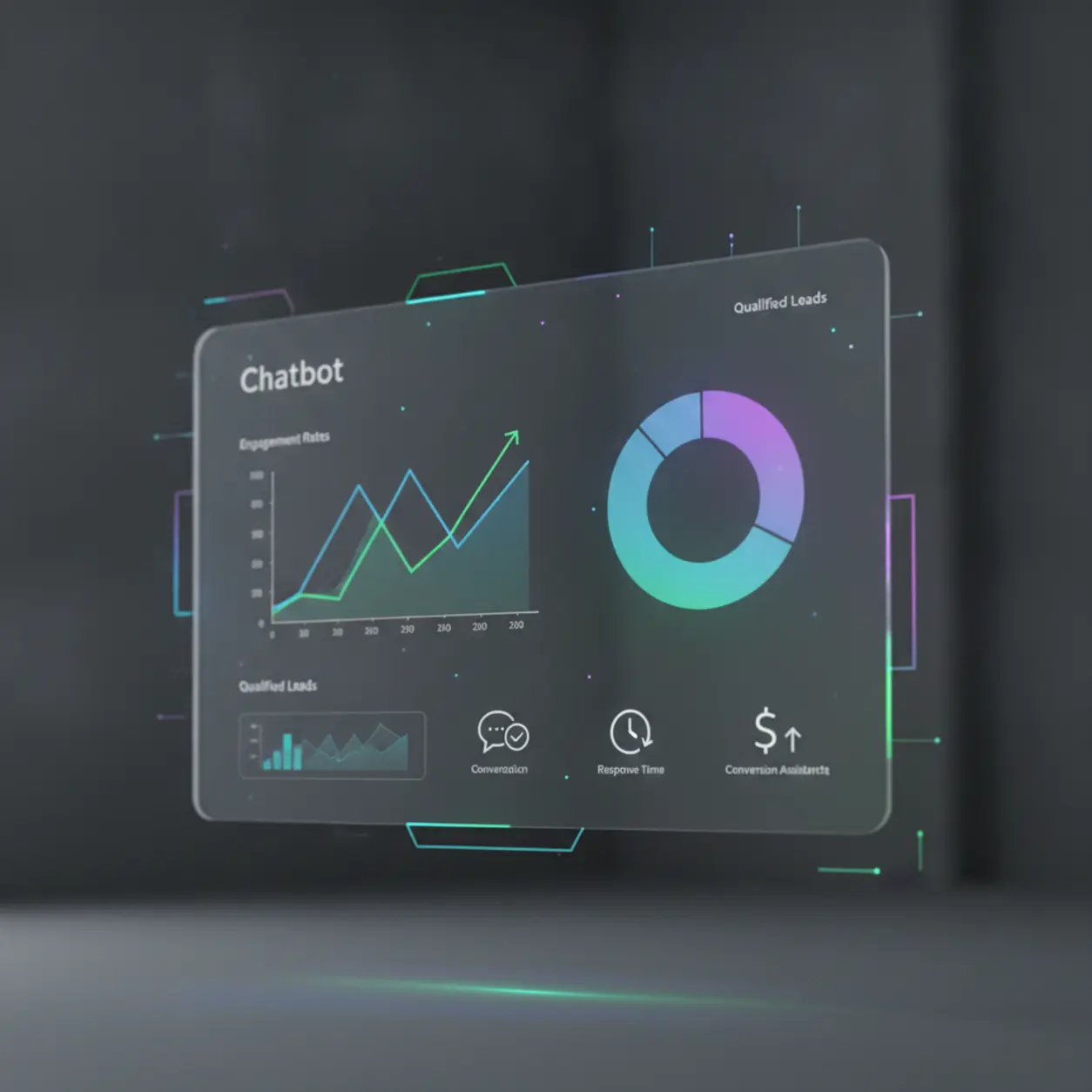
For most marketing and sales teams, the primary purpose of a chatbot is to generate and qualify leads. This is where the chatbot’s performance directly translates into tangible business value. Tracking metrics in this category helps you understand how effectively your bot is turning anonymous website visitors into potential customers. It’s not just about collecting email addresses; it’s about identifying high-intent prospects and seamlessly passing them to your sales team. Optimizing these metrics ensures that your sales pipeline is consistently filled with well-qualified leads, reducing wasted effort and accelerating the sales cycle.
Lead Generation Rate: Turning Conversations into Opportunities
The Lead Generation Rate measures how many of your chatbot’s conversations result in the capture of a new lead. This is a core conversion metric for any business using chatbots for marketing or sales. It tells you how effective your chatbot is at its primary job of identifying and capturing visitor information. The calculation is simple: (Number of Leads Captured by Chatbot / Total Number of Conversations) x 100.
To improve this rate, you must optimize the conversation flow leading up to the information request. Don’t ask for an email address or phone number right away. First, provide value. Answer a question, offer a resource (like a whitepaper or a case study), or help the user navigate to the right page. Once you’ve established trust and demonstrated usefulness, the user will be far more willing to share their contact details. Your call-to-action should be clear and compelling. Instead of a generic „Enter your email,” try „Where should I send your free guide?” or „Enter your email to get a personalized quote.” A comprehensive solution like Chatbot360 can help you design and A/B test these conversational funnels to maximize your lead generation rate.
Qualified Leads Rate: Separating the Signal from the Noise
Not all leads are created equal. A crucial part of optimization is ensuring your chatbot isn’t just generating a high volume of leads, but a high volume of qualified leads. The Qualified Leads Rate measures the percentage of leads captured by the chatbot that meet your predefined criteria for a quality prospect (e.g., based on company size, industry, budget, or specific needs). This metric is vital for aligning your marketing and sales efforts.
To track this, you need to implement a lead scoring or qualification process within your chatbot’s conversation flow. This involves asking strategic questions to gather key information. For example, a B2B chatbot might ask:
- What is your job title?
- How many employees are in your company?
- What is your biggest challenge with [your area of service]?
Based on the answers, the chatbot can assign a score to the lead or categorize them as a Marketing Qualified Lead (MQL) or Sales Qualified Lead (SQL). A high Qualified Leads Rate means your chatbot is effectively filtering prospects, allowing your sales team to focus their time and energy on the opportunities most likely to close. If this rate is low, you may need to refine your qualifying questions or adjust the conversation path to better identify high-intent users. Advanced chatbot platforms enable you to build complex qualification logic and integrate directly with your CRM to streamline this process.
„Data is the new oil. It’s valuable, but if unrefined, it cannot really be used. The same is true for chatbot metrics. Raw numbers are useless without the context and analysis that turn them into actionable insights for optimization.”
Analyzing Performance, Efficiency, and Business Impact
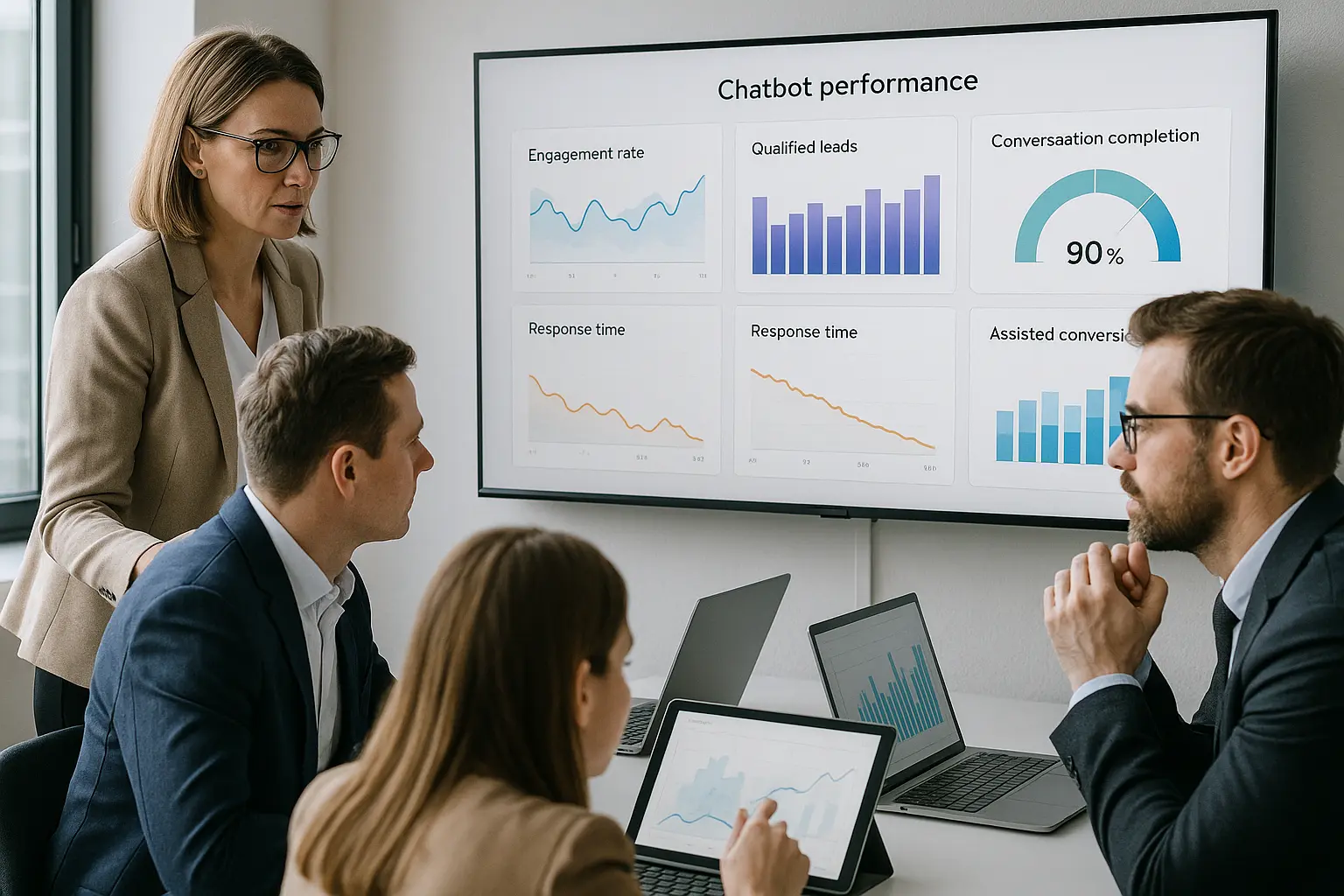
Beyond engagement and lead generation, a third category of metrics focuses on the chatbot’s operational performance and its broader impact on the business. These KPIs help you understand the user experience, the efficiency of your support systems, and the chatbot’s role in the overall customer journey. A fast, efficient, and helpful chatbot not only improves user satisfaction but can also significantly reduce operational costs and contribute to revenue in ways that are not always immediately obvious. Monitoring these metrics ensures your chatbot is a well-oiled machine that enhances, rather than hinders, your business processes.
Average Response Time: The Need for Speed
One of the primary advantages of a chatbot is its ability to provide instant responses, 24/7. The Average Response Time measures the speed at which your chatbot replies to user inputs. While AI-powered bots typically respond in milliseconds, this metric is particularly important for hybrid models where human agents are involved. Even for fully automated bots, a delay can sometimes occur due to server latency or complex database lookups.
Slow response times completely undermine the value proposition of a chatbot and lead to user frustration and abandonment. You should monitor this metric to ensure a consistently snappy and seamless user experience. If you notice spikes in response time, it could indicate technical issues that need to be addressed. A fast response time reinforces the feeling of an efficient, modern interaction and keeps the user engaged in the conversation. For businesses looking for robust performance, solutions like Chatbot360 are built on scalable infrastructure to ensure consistently low response times.
Human Takeover Rate: Knowing When to Escalate
No chatbot is perfect. There will always be complex, sensitive, or high-intent queries that require a human touch. The Human Takeover Rate (or Escalation Rate) measures how often a conversation is transferred from the chatbot to a human agent. This metric is a double-edged sword. A very high rate might suggest your chatbot is failing to understand user queries or isn’t equipped to handle the necessary tasks. It could be a sign that its knowledge base is insufficient or its NLP capabilities need improvement.
Conversely, a rate of zero is not necessarily ideal. It might mean you are not offering an escalation path when you should be, potentially frustrating users with complex problems who need to speak to a person. The goal is to find a healthy balance. The chatbot should handle the majority of routine, repetitive queries, freeing up human agents to focus on high-value interactions. Analyzing the conversations that lead to a takeover is crucial. This provides a roadmap for improving your chatbot’s scripts and capabilities. You can identify common questions the bot can’t answer and add them to its knowledge base. A sophisticated system like Chatbot360 offers seamless escalation protocols, ensuring a smooth transition from bot to human without losing context.
Assisted Conversions: The Unseen Influence
Sometimes, a chatbot’s biggest impact is not in directly capturing a lead but in influencing a user who converts later. Assisted Conversions track the instances where a user interacted with the chatbot at some point in their journey before eventually converting through another channel (e.g., filling out a form, making a purchase, or calling your sales line). This metric is crucial for understanding the chatbot’s true ROI.
Without tracking assisted conversions, you might underestimate your chatbot’s value. For example, a user might ask the chatbot a few questions about a product’s features, leave the site, and then return the next day to make a purchase directly. The chatbot played a key role in that decision by providing timely information, but it wouldn’t get credit in a last-touch attribution model. By integrating your chatbot analytics with your main analytics platform (like Google Analytics), you can see its role in the broader conversion path. This gives you a more holistic view of its performance and helps justify the investment in chatbot technology. Proving this indirect value is a key feature of advanced analytics, a field where platforms like Chatbot360 excel by offering deep integration capabilities.
In conclusion, a data-driven approach is non-negotiable for anyone serious about leveraging chatbots to grow their business. By consistently measuring and analyzing these key metrics—from initial engagement to assisted conversions—you can move from guesswork to a strategic, iterative process of optimization. Each data point tells a story about your users and your chatbot’s performance, providing the insights you need to refine conversational flows, improve user experience, and ultimately drive more conversions. If you’re ready to unlock the full potential of your chatbot with advanced analytics and optimization tools, we’re here to help. Contact us today to learn how we can transform your conversational marketing strategy.
Dodaj komentarz