
In today’s digital landscape, businesses are armed with an arsenal of powerful tools. We have sophisticated content management systems, intelligent AI-powered chatbots, and robust Customer Relationship Management (CRM) platforms. Each of these components is a powerhouse in its own right, designed to optimize a specific part of the customer journey. Yet, for many organizations, they operate in isolation, like talented musicians playing different songs in separate rooms. The result is not a symphony, but a cacophony of disconnected experiences, lost data, and missed opportunities. The content team creates brilliant articles, but the chatbot on the page has no idea what the user is reading. The chatbot qualifies a lead, but the sales team receives a notification with zero context. This fragmentation is the single biggest barrier to achieving a truly seamless and intelligent customer experience.
The solution is not to find yet another standalone tool, but to connect the ones you already have with an intelligent, overarching strategy. This is the essence of AI Workflow Orchestration. It’s about building bridges between your systems, allowing valuable context to flow freely from one stage to the next. Imagine a world where your website knows what a visitor is interested in before they even ask, where your chatbot can hold a meaningful, context-aware conversation, and where your sales team is empowered with a complete history of every interaction before they even pick up the phone. This isn’t a futuristic vision; it’s a practical reality made possible by orchestrating the flow of information between your content, chatbots, and CRM. This post will serve as a blueprint for how to break down these digital silos and build a unified AI ecosystem that drives efficiency, personalization, and ultimately, growth.
Table of Contents:
- The Silo Problem: Why Disconnected AI Tools Fail Your Business
- The Power of Orchestration: Creating a Unified AI Ecosystem
- A Practical Blueprint: Orchestrating the Customer Journey from Click to Close
The Silo Problem: Why Disconnected AI Tools Fail Your Business
The proliferation of Software-as-a-Service (SaaS) solutions has given marketers and sales professionals unprecedented power. However, it has also inadvertently created a new, complex problem: the digital silo. Each department adopts the „best-in-class” tool for its specific function without considering how it integrates with the broader technology stack. The marketing team uses one platform for analytics and content, the web team implements a separate chatbot, and the sales team lives inside their CRM. While each tool may be excellent at its job, the lack of communication between them creates significant friction, not just internally, but for the customer as well.
The Disjointed Customer Journey
Let’s consider a typical, yet flawed, customer journey. A potential client, let’s call her Sarah, is looking for a solution to improve her company’s project management. She finds a highly informative blog post on your website titled „10 Strategies for Agile Project Management.” She spends ten minutes reading it, clearly demonstrating high interest. A chatbot pops up and asks a generic question: „Hello! How can I help you today?” Sarah, despite having just consumed detailed content on a specific topic, now has to start from scratch. She has to re-explain her interest in project management. The chatbot, lacking the context of her on-page behavior, engages in a rigid, scripted conversation. After a few questions, it identifies her as a potential lead and asks for her email. The information is then passed to the CRM, and a day later, a salesperson calls Sarah. The salesperson starts with, „Hello, I see you visited our website. Are you interested in learning more about our services?” Sarah is frustrated. She has to explain her needs for a third time. This broken, repetitive experience makes your company seem disorganized and indifferent to her time and intent.
Wasted Data and Lost Context
In the scenario above, a wealth of valuable data was generated at each step, but most of it was lost in translation between the silos. The marketing analytics tool knows Sarah read the agile project management blog, but that information never reached the chatbot. The chatbot captured some basic qualifying information, but the rich conversational nuances might not have been fully transferred to the CRM. The salesperson in the CRM sees a new lead with a name and email, but lacks the critical context that could have turned a cold call into a warm, relevant conversation. This lost context includes:
- The specific content the user consumed (their primary interest).
- The exact questions they asked the chatbot (their specific pain points).
- The sentiment and urgency expressed during the conversation.
- The user’s journey through the website before and after the chat.
Without this context, personalization is impossible. Every interaction is a cold start, forcing the customer to repeat themselves and preventing your team from building a meaningful relationship based on a progressive understanding of their needs. This inefficiency directly impacts conversion rates and customer satisfaction. To truly leverage the power of modern technology, you must ensure data flows seamlessly across platforms. The experts at MarketingV8 specialize in breaking down these data silos to create a cohesive strategy.

Inefficient Sales and Marketing Teams
The negative impact of data silos extends deep into your organization’s internal operations. When systems are disconnected, your teams are forced to work harder, not smarter. Marketing teams struggle to prove the ROI of their content because they cannot directly attribute leads to specific articles or campaigns in the CRM. They see website traffic, but the link to revenue is blurry. Sales teams spend a significant portion of their time on manual research, trying to piece together a lead’s history by toggling between different applications. They might have to manually look up chat transcripts or ask marketing for web activity reports. This administrative overhead is a drain on productivity and morale. It turns highly-skilled salespeople into data detectives, reducing the time they can spend on what they do best: building relationships and closing deals. This operational drag slows down response times, leading to missed opportunities as potential customers move on to competitors who provide a faster, more coherent experience.
The Power of Orchestration: Creating a Unified AI Ecosystem
The antidote to the chaos of digital silos is orchestration. AI Workflow Orchestration is the practice of intelligently connecting disparate systems and applications to automate processes and ensure a seamless flow of data. It’s not just about simple API connections that push data from point A to point B. It’s about creating an intelligent, event-driven ecosystem where an action in one system can trigger a series of context-aware responses in others. Think of the AI orchestrator as the central nervous system of your marketing and sales technology stack. It receives signals from all endpoints—your website, your content, your chatbot, your CRM—and makes intelligent decisions about what to do next.
What is AI Workflow Orchestration? (A Deeper Dive)
At its core, AI workflow orchestration uses a central logic engine, often powered by artificial intelligence and machine learning, to manage the interplay between your tools. It operates on a system of triggers and actions. For example:
- Trigger: A user spends more than three minutes on a pricing page.
- Action 1: The orchestration engine informs the chatbot to proactively engage with a message like, „I see you’re looking at our pricing plans. Can I help you find the right fit for your team size?”
- Action 2: It simultaneously tags the user’s profile in the CRM with „High-Intent” and „Pricing-Viewed”.
- Action 3: If the user provides their email in the chat, the engine triggers an automated email sequence tailored to prospects who have viewed the pricing page.
This is a simple example, but it illustrates the power of a connected system. Instead of three separate events, it becomes one cohesive, intelligent workflow designed to guide the user effectively through the consideration phase. This is the kind of advanced automation that defines modern marketing success, a core principle of the strategies developed at MarketingV8.
The Core Components: Content, Chatbots, and CRM
While an orchestration strategy can involve dozens of tools, the most powerful and fundamental connection for most businesses is the triumvirate of content, chatbots, and CRM. These three components represent the key phases of the modern digital customer journey: attraction, engagement, and conversion.
Content: This is the starting point. It’s how you attract visitors and establish authority. Your blog posts, whitepapers, case studies, and landing pages are rich sources of information about a visitor’s interests and intent. Orchestration leverages this by tracking content consumption to build a profile of the user’s needs before they ever initiate a conversation.
Chatbots: This is the interactive engagement layer. Modern AI chatbots are far more than simple FAQ machines. When integrated into an orchestrated workflow, they become powerful tools for real-time qualification and personalization. They can access the context provided by content consumption to tailor their conversations and ask more intelligent, relevant questions.
CRM: This is your system of record and the engine of your sales process. In an orchestrated workflow, the CRM becomes the ultimate beneficiary of all the context gathered in the preceding stages. It ceases to be a passive database and becomes an active, dynamic platform where leads arrive pre-qualified, enriched with deep insights, and accompanied by automated tasks for immediate, relevant follow-up.
„The future of customer experience is not about having the best AI chatbot or the best CRM. It’s about how seamlessly you connect them. The magic happens in the handoff, where context is preserved and the conversation is elevated, not reset.”
The Role of AI as the „Intelligent Glue”
Artificial intelligence is the critical element that makes modern workflow orchestration possible. It acts as the „intelligent glue” holding the entire ecosystem together. AI, specifically through Natural Language Processing (NLP) and Machine Learning (ML), provides the analytical power to understand unstructured data and make predictive decisions. NLP allows the system to understand the intent behind a user’s typed query in a chatbot. Machine learning models can analyze behavior across thousands of users to predict which leads are most likely to convert, allowing for dynamic lead scoring. This intelligence ensures that the right information is passed to the right system at the right time, transforming a simple series of automated tasks into a truly smart and adaptive workflow. Building these intelligent systems is a complex task, but it’s a challenge that unlocks immense potential for any business. Many companies turn to expert services like MarketingV8 to architect these powerful integrations.
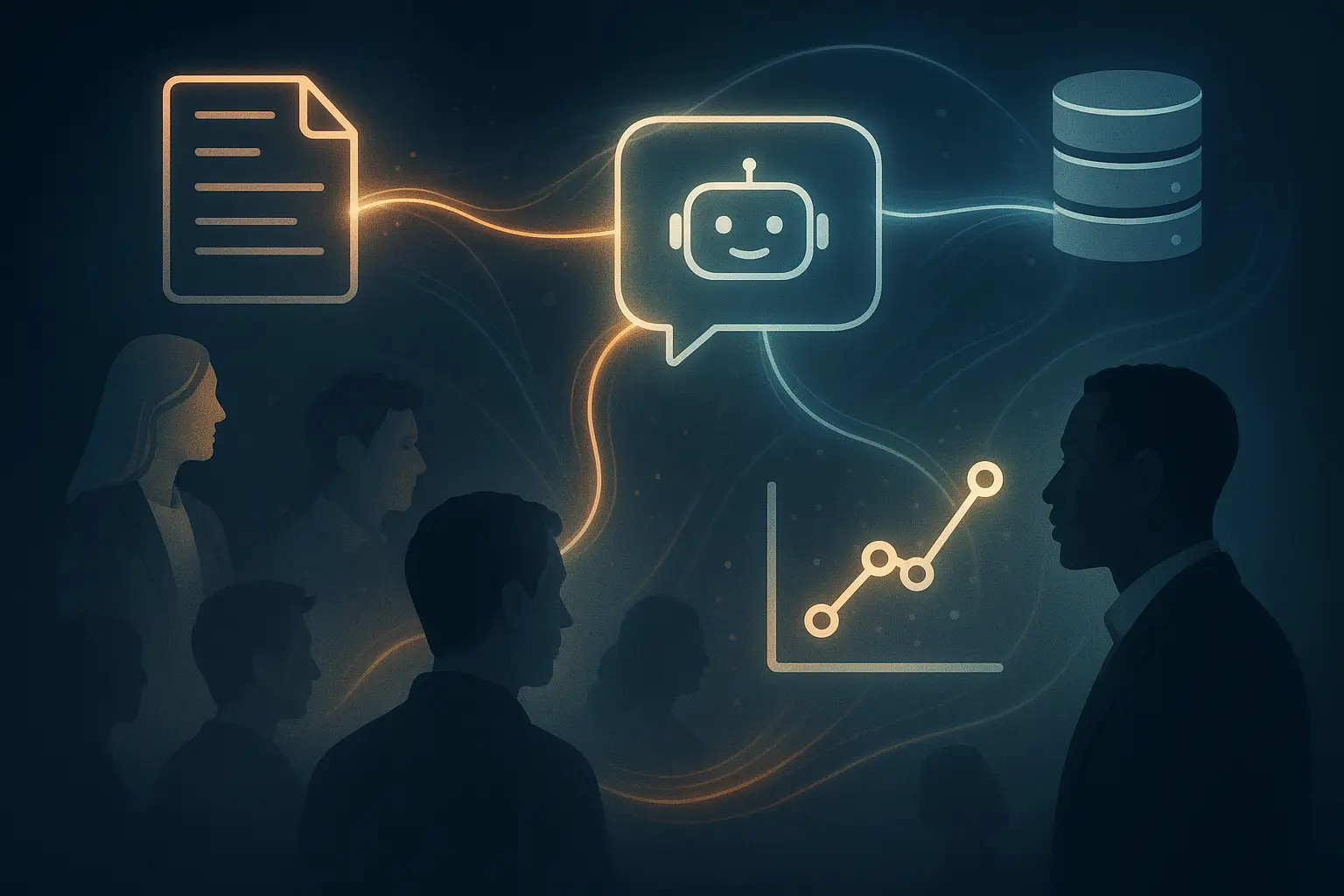
A Practical Blueprint: Orchestrating the Customer Journey from Click to Close
Understanding the theory is important, but the real value lies in its practical application. Let’s walk through a step-by-step blueprint of an orchestrated workflow, revisiting our user, Sarah, to see how a connected system creates a vastly superior experience for both her and the business.
Step 1: Context-Aware Content Delivery
The journey begins with content, but in an orchestrated system, it’s not a passive experience. Sarah arrives on your website through a search for „agile project management tools for marketing teams.” She clicks on your blog post, „The Ultimate Guide to Agile Marketing.”
What happens in a connected system:
- Behavioral Tracking: The orchestration engine, connected to your website analytics, immediately logs her entry point and the topic of the content she is consuming. It identifies keywords like „agile,” „marketing teams,” and „project management.”
- Dynamic Personalization: Based on this initial interest, the system can make subtle changes to her experience. For example, the related articles shown at the end of the post are not generic; they are specifically about agile marketing case studies or comparisons of different project management software. A call-to-action on the page might dynamically change from a generic „Contact Us” to a more relevant „Download our Agile Marketing ROI Calculator.”
- Profile Building: Even as an anonymous visitor, a preliminary profile is being built for Sarah. The system notes her interest cluster around „Agile Marketing.” This initial data point is the first crucial piece of context.
This first step ensures that from the moment a user lands on your site, you are actively learning about their needs and subtly tailoring the experience to be more relevant. This level of detail sets the stage for a more intelligent interaction. Businesses looking to implement such dynamic content strategies can leverage the expertise found at MarketingV8 for customized solutions.
Step 2: Intelligent Chatbot Engagement
After Sarah has spent a few minutes reading the article, a chatbot appears. This is where the orchestration truly shines, as the handoff from passive content consumption to active engagement is seamless.
What happens in a connected system:
- Contextual Opening: Instead of a generic „How can I help you?”, the chatbot, fed information from the orchestration engine, initiates a personalized conversation. It says, „Hi there! I see you’re reading our guide to agile marketing. Are you currently looking for a tool to help your team implement these strategies?”
- Informed Conversation: Sarah is immediately impressed. The chatbot already understands her context. She responds, „Yes, we are struggling with managing sprints and tracking our marketing campaigns.” The chatbot’s NLP capabilities understand these specific pain points. It can then ask targeted qualifying questions: „I see. To help, could you tell me your team size? And what’s your biggest challenge right now: task visibility or reporting?”
- Dynamic Qualification: As Sarah answers, the orchestration engine is working in the background. It scores her as a high-quality lead based on her expressed needs and engagement. She mentions her team has 15 people and that reporting is their main issue. The system recognizes this as a key characteristic of an ideal customer profile.
The conversation is no longer a rigid script; it’s a dynamic, helpful dialogue that gathers crucial information while providing genuine value to the user. This is what transforms a simple chatbot into a powerful sales and marketing asset. Getting this conversational design right is key, a service offered by leading agencies like MarketingV8.
Step 3: Seamless CRM Handoff and Enrichment
Once the chatbot has qualified Sarah as a strong lead, the final and most critical step is the handoff to the CRM. In a siloed system, this is where most of the context is lost. In an orchestrated system, this is where all the gathered intelligence is consolidated to empower the sales team.
What happens in a connected system:
- Rich Lead Creation: When Sarah provides her email, a new contact is not just created in the CRM. It’s an enriched profile containing a wealth of information. The lead record in the CRM would automatically populate with fields like:
- Lead Source: Blog Post – „The Ultimate Guide to Agile Marketing”
- Primary Interest: Agile Project Management, Marketing Reporting
- Team Size: 15
- Expressed Pain Point: „Struggling with reporting on marketing campaign sprints.”
- Full Chat Transcript: A link to the complete conversation for full context.
- Lead Score: 95/100 (automatically calculated based on her answers and behavior).
- Automated Task Assignment: The system doesn’t just create the lead and leave it in a queue. It automatically assigns it to the correct salesperson (e.g., one who specializes in marketing clients) and creates a priority task: „Follow up with Sarah from [Company]. She is interested in agile marketing solutions, specifically for reporting with a 15-person team. See full chat transcript for details.”
- Empowered Sales Follow-up: When the salesperson calls Sarah, the conversation is completely different. It begins with, „Hi Sarah, my name is Alex. I saw you were reading our guide on agile marketing and spoke with our chat assistant about the challenges you’re facing with reporting for your team. I have a few ideas on how we can help with that.”
This single workflow has transformed a series of disjointed touchpoints into a cohesive, intelligent, and highly effective customer journey. Sarah feels understood and valued, and the salesperson is equipped to have a meaningful, solution-oriented conversation from the very first second. The result is a drastically shortened sales cycle, a higher conversion rate, and a superior customer experience that builds trust and loyalty from the outset.
By moving away from isolated tools and embracing a strategy of AI workflow orchestration, you connect the dots of your customer’s journey. You stop forcing them to repeat themselves and start building a conversation that evolves with each interaction. This is the future of digital marketing and sales—a unified ecosystem where content, chatbots, and CRM work in concert to deliver unparalleled personalization and efficiency. If you are ready to build these intelligent connections and transform your customer experience, the first step is to connect with experts who understand the complete ecosystem.
To learn how you can implement a bespoke AI orchestration strategy for your business, contact us today.
Dodaj komentarz