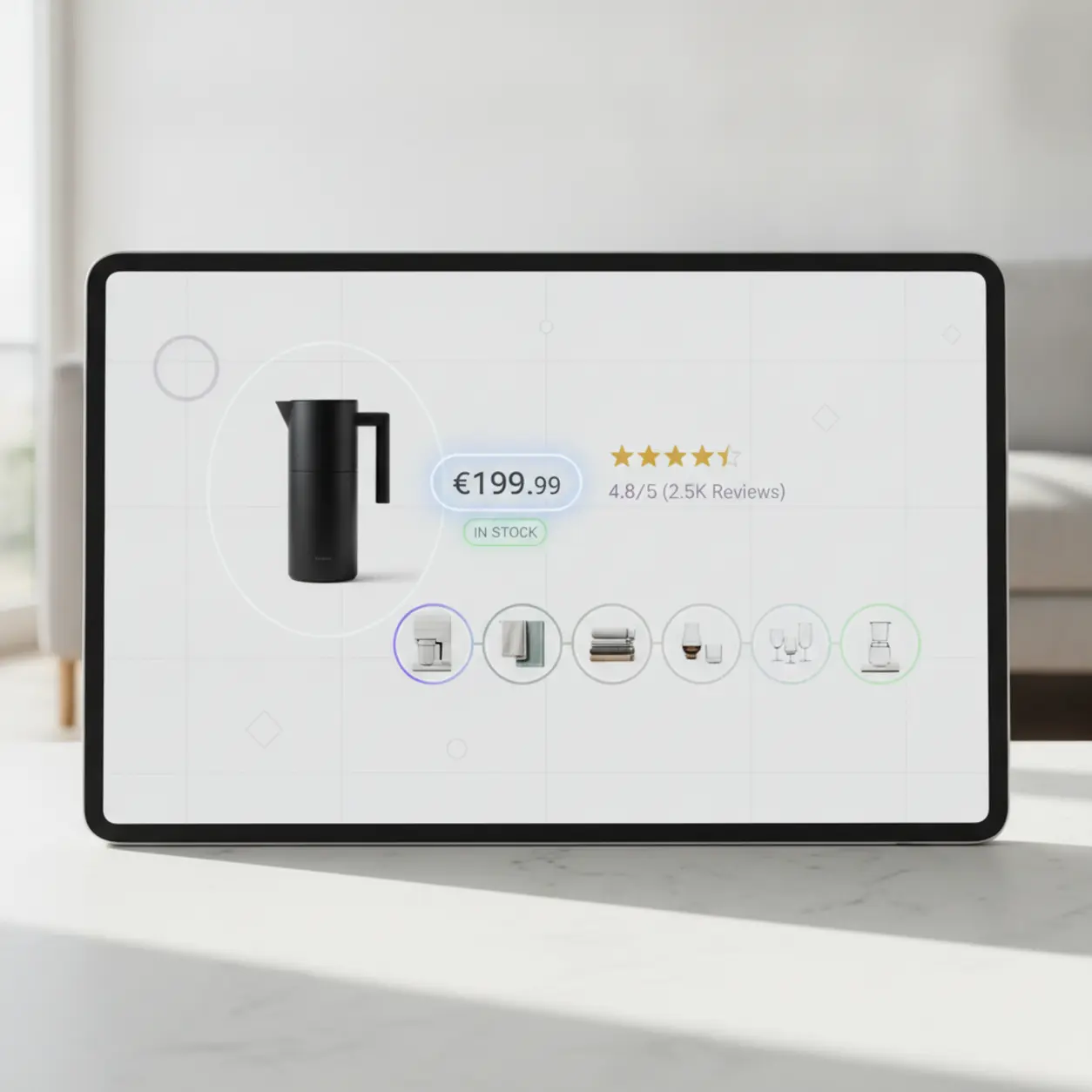
The world of marketing is standing on the precipice of a transformation so profound it will redefine the very nature of brand communication. For decades, the goal has been to capture human attention, to appeal to emotion, logic, and desire. But a new audience is emerging, one that operates not on feelings but on data, not on creativity but on clarity. This audience is the AI agent. From Siri and Alexa to the far more sophisticated, personalized assistants of the near future, these digital entities are becoming the primary gatekeepers between consumers and brands. They are the new discovery channel. The question for every marketer, business owner, and brand strategist today is no longer just „How do we reach our customers?” but „How do we convince our customers’ AI to choose us?”
This shift represents a fundamental change in the marketing paradigm. We are moving from a human-centric model to an AI-mediated one, where our messaging must be optimized for machine comprehension before it ever reaches a human user. These agents will compare options, evaluate evidence, scrutinize claims, shortlist vendors, and ultimately recommend a course of action to their human counterparts. Failing to adapt to this new reality is not just a missed opportunity; it is a direct path to obsolescence. This article delves into the rise of marketing to AI agents, exploring the new rules of engagement and outlining the critical strategies your brand must adopt to remain visible, relevant, and chosen in an algorithm-driven marketplace.
Table of Contents:
- The Inevitable Shift: From Human-First to AI-Mediated Marketing
- The New Marketing Funnel: How AI Agents Discover and Evaluate Brands
- Strategies for Marketing to AI: The Playbook for Future-Proof Brands
The Inevitable Shift: From Human-First to AI-Mediated Marketing
For the entirety of its history, marketing has been an art of human persuasion. It has relied on psychology, storytelling, and emotional connection. While data has played an increasingly important role, its ultimate purpose has been to better understand and influence human behavior. The emergence of AI agents as consumer proxies forces a radical re-evaluation of this approach. The new target audience is a logical, data-driven entity that is immune to clever taglines and beautiful imagery unless those creative assets are supported by a foundation of clear, structured, and verifiable information. The shift is not a distant sci-fi concept; it is a present-day reality accelerating with every new smart device sold and every advancement in machine learning.
Understanding the AI Agent
When we talk about an „AI agent,” it is crucial to think beyond today’s voice assistants that primarily handle simple commands. The agents we must prepare for are proactive, deeply personalized digital butlers. These entities will have a profound understanding of their user’s preferences, purchase history, ethical considerations, budget constraints, and long-term goals. Their function is not merely to search, but to research, analyze, and decide.
Consider these scenarios:
- Consumer Goods: A user tells their agent, „Restock my pantry for the week, focusing on low-sugar, high-protein options that are ethically sourced and delivered by tomorrow.” The agent will not simply search for groceries. It will scan product databases, compare nutritional information via APIs, cross-reference brand certifications for ethical sourcing, check real-time inventory and delivery slots, and place the order—all without showing the user a single branded advertisement.
- Travel: A command like, „Plan a 10-day trip to Italy for two in September, budget is $5,000, we prefer boutique hotels over large chains and want to focus on culinary experiences,” will trigger a complex workflow. The agent will analyze flight prices, evaluate hotel reviews based on sentiment analysis, identify regions known for culinary excellence, check visa requirements, and present a fully-formed itinerary, not just a list of links.
- B2B Services: A business manager might ask, „Find the top three project management software solutions for a remote team of 20, that integrate with Slack and Google Workspace, and have a per-user cost under $15 per month.” The agent’s job is to sift through countless SaaS providers, validate integration claims through documentation or APIs, compare feature sets against the stated needs, and deliver a concise shortlist with a recommendation.
In each case, the AI agent acts as a powerful filter, a gatekeeper that stands between the vast ocean of commercial choice and the user. The brands that make it through this filter will be the ones that speak the agent’s language: the language of data. This is where modern digital strategies, such as those championed by experts at MarketingV8, become indispensable.
Why This Change is Happening Now
This evolution is not accidental; it is the result of several converging technological and societal trends. The primary driver is information overload. The average consumer is bombarded with thousands of brand messages daily. The sheer volume of choice is paralyzing, leading to decision fatigue. AI agents offer a powerful solution: outsourcing the cognitive load of decision-making to a capable assistant that can process information at a scale and speed no human can match.
Simultaneously, the technology has reached a critical tipping point. Advances in Natural Language Processing (NLP) allow us to communicate with machines in a more human, conversational way. Machine learning algorithms have become exceptionally good at identifying patterns and predicting user needs based on past behavior. The proliferation of connected devices, from smartphones to smart homes, creates a constant stream of data that fuels these agents, making them smarter and more personalized with every interaction. Finally, there is a growing consumer trust in technology to simplify complex tasks. We already trust algorithms to recommend movies, navigate our cities, and manage our finances. Trusting them to shortlist products and services is the logical next step in this progression.

The New Marketing Funnel: How AI Agents Discover and Evaluate Brands
The traditional marketing funnel—Awareness, Interest, Consideration, Conversion, Loyalty—was built for a human journey of discovery. It assumes a linear progression of psychological states. The AI-mediated funnel is different. It is a technical process, a series of data-driven checkpoints. Awareness is not about seeing an ad; it is about being indexed. Consideration is not about an emotional connection; it is about meeting a set of logical criteria. For brands, this means re-engineering their entire approach to visibility and persuasion.
The Data Diet of an AI Agent
To be selected by an AI agent, a brand must be „ingestible.” The agent needs to be able to consume, understand, and categorize information about your products and services with perfect accuracy. The quality of your data is the quality of your marketing. An agent’s diet consists of several key ingredients:
- Structured Data: This is the most important food group. It includes things like Schema.org markup on your website, well-organized product feeds sent to merchant centers, public APIs with clear documentation, and entries in knowledge graphs like Wikidata. Structured data removes ambiguity. It explicitly tells an agent, „This is a product, its price is X, its size is Y, and its feature is Z.” Without it, the agent is forced to guess, and AI agents do not like to guess.
- Unstructured Data: This includes the vast amount of text-based content across the web, such as customer reviews, blog posts, news articles, and social media mentions. The agent uses sentiment analysis and entity recognition to process this data, building a qualitative picture of a brand’s reputation, perceived quality, and customer satisfaction. A positive review is a data point. A negative one is a disqualifying data point.
- User-Specific Data: The agent’s primary directive is to serve its user. It constantly analyzes the user’s past purchases, browsing history, explicit preferences („I prefer organic products”), and implicit behaviors (always choosing the fastest shipping option). Your brand’s ability to align with these user-specific data points is critical for being included in the final recommendation.
The future of SEO is evolving into what could be called Agent Search Optimization (ASO). It’s a more technical, data-centric discipline focused on making your brand perfectly legible to machines. Organizations that excel in this area will gain a significant competitive advantage. For businesses looking to get ahead, partnering with a forward-thinking agency like MarketingV8 can provide the necessary expertise.
The AI’s Evaluation Criteria
An AI agent evaluates brands based on a complex, multi-factor algorithm designed to find the optimal solution for its user. While the exact weighting of these factors will vary, the core criteria are predictable and logical. Marketing efforts must be reoriented to score highly on these machine-driven metrics.
The primary criteria include:
- Objective Facts: These are the non-negotiables. Does the product meet the user’s core requirements? This includes price, availability, specifications, features, compatibility, and delivery speed. If your product is out of stock or does not meet the price ceiling, you are instantly disqualified. This data must be accurate and available in real-time.
- Quantified Quality: AI agents turn qualitative concepts into numbers. They will not just see that you have „good reviews”; they will calculate an aggregate sentiment score across multiple platforms, weighting recent reviews more heavily. They will look for third-party certifications, industry awards, and expert ratings to generate a „trust score.”
- Personalization Alignment: How well does your brand align with the user’s known profile? This goes beyond basic demographics. It includes ethical alignment (e.g., sustainability, fair trade), brand affinity (past positive interactions), and even stylistic preferences learned over time.
- Trust and Security: The agent has a duty of care to its user. It will check for secure websites (HTTPS), clear privacy policies, transparent return processes, and reliable customer service channels. Any signal of untrustworthiness can lead to immediate exclusion.
In the age of AI, your brand isn’t what you say it is. It’s what the data says it is. Your marketing must become an exercise in data integrity and clarity.
This data-first approach requires a level of transparency and consistency that many brands are currently unprepared for. Every piece of information about your company online becomes a potential factor in an AI’s decision-making matrix.

Strategies for Marketing to AI: The Playbook for Future-Proof Brands
Adapting to this new landscape requires a proactive and strategic shift in marketing operations. It is not about abandoning traditional marketing, but augmenting it with a new layer of technical, data-focused optimization. Brands must build a „digital twin” of their value proposition that is perfectly optimized for machine consumption. Here are the core strategies to begin implementing today.
Mastering Machine-Readable Content
Your first and most important task is to translate your brand’s story and product offerings into a language that machines can parse without error. Marketing fluff and ambiguous language are the enemies of AI comprehension.
Structured Data is King: The single most impactful action you can take is to implement comprehensive structured data across your entire digital presence. Use Schema.org markup on your website to explicitly label every element: products, prices, reviews, business hours, locations, events, and more. If you sell products, your product feeds must be flawless, with every attribute completed accurately. For B2B or service-based businesses, consider creating a public API that allows trusted AI agents to query your offerings directly. This is the foundation upon which all other strategies are built. A clear, structured data layer is essential for success, and a core component of advanced digital strategies offered by MarketingV8.
Content for Clarity: Your written content must serve two audiences. While it should still engage humans, it must also be written with machine parsability in mind. This means using clear, direct language. State facts plainly. Use headings and lists to structure information logically. Instead of saying „Our revolutionary widget enhances productivity,” which is subjective, say „The Model X Widget increases data processing speed by 30% for compatible systems.” The latter is a verifiable fact that an AI can use in a comparison.
Develop a Knowledge Graph: Go beyond your own website. Actively contribute to public knowledge graphs like Wikidata. Ensure your company’s profile, products, founders, and key attributes are accurately represented in these central data repositories. Major AI systems like Google’s and others heavily rely on these graphs to understand entities and their relationships. Owning your brand’s identity within these systems is a form of next-generation brand management.
Optimizing for Conversational Search
The way people query for information is changing. We are moving away from stilted keywords („pizza restaurant open late”) towards natural, conversational questions („Where can I get a slice of vegan pepperoni pizza that delivers to my address after 11 PM?”). AI agents are designed to process these complex, multi-intent queries. To be the answer, your content must provide granular, attribute-based information.
This means going deep into the details of your offerings. A restaurant should not just list „pizza” on its menu; it should have machine-readable data for every topping, dietary information (gluten-free, vegan), and specific attributes like „wood-fired” or „deep-dish.” A software company should detail every single integration, feature, and pricing tier in a structured way. The more detailed, specific attributes you can provide, the more likely you are to match a complex conversational query from an AI agent. It’s about having the most comprehensive and accurate answer to every possible question.
Building a Verifiable Reputation
In a world where AI agents act as fact-checkers, trust cannot be claimed; it must be earned and proven with data. An agent will not take your word that you are „the most trusted provider.” It will look for external validation. Your marketing efforts must, therefore, focus on generating authentic, third-party signals of trust.
This involves actively managing and encouraging customer reviews on reputable platforms. It means seeking out and highlighting industry certifications, awards, and positive mentions in established publications. It requires absolute transparency in your business practices, from clear and simple pricing to easy-to-find return policies. Every claim you make on your website should be backed by a source or data point that an AI can verify. For instance, if you claim your product is „eco-friendly,” you need a link to a recognized certification to prove it. Authenticity and transparency are no longer just brand values; they are technical requirements for AI visibility. Building this verifiable trust is a complex task, and consulting with a digital marketing expert like MarketingV8 can help streamline the process.
Direct-to-Agent (D2A) Communication Channels
Looking further ahead, we can anticipate the rise of new communication channels designed specifically for brand-to-AI interaction. The concept of a „website for humans” and a „data feed for machines” will likely evolve into more sophisticated platforms. We may see the development of standardized protocols for brands to „register” their products and services directly with major AI ecosystems like those from Apple, Google, and Amazon. This would allow for real-time updates on inventory, pricing, and new features, ensuring the AI agent always has the most current information.
Brands may need to develop specialized APIs tailored for AI agent consumption, providing a direct line for inquiries. The role of the marketer will expand to include managing these technical relationships and ensuring the brand’s data is flawlessly represented across these AI platforms. This is the new frontier of digital distribution. Staying informed on these developments is crucial for any business with long-term ambitions. The digital landscape is always evolving, and platforms like MarketingV8 stay at the forefront of these changes to help businesses navigate the future.
The transition to a world where we market to AI agents is no longer a matter of „if,” but „when.” This shift demands a new mindset, a new skillset, and a new set of strategies grounded in data, clarity, and verifiability. The brands that will thrive in this new era are the ones that begin their transformation today. The process starts with a fundamental audit of your digital presence through the „eyes” of a machine. Is your information structured and easy to parse? Are your claims backed by verifiable data? Is your reputation reflected in quantifiable metrics across the web?
This is a technical challenge as much as it is a marketing one. It requires collaboration between marketing teams, developers, and data scientists. By focusing on building a foundation of machine-readable content, optimizing for the nuances of conversational search, and cultivating a verifiable reputation, you can ensure that when a user’s trusted AI agent goes looking for a solution, your brand is not just on the list—it’s the top recommendation. The future of brand discovery is here, and it runs on algorithms.
To begin preparing your brand for the age of AI marketing and ensure you are ready for the next discovery channel, contact us at MarketingV8. Our team can help you navigate the complexities of this new digital landscape.